Showing posts with label Recreation. Show all posts

Sunday, March 17, 2013

What’s Inside A Bass Fishing Home Page?

Bass fishing
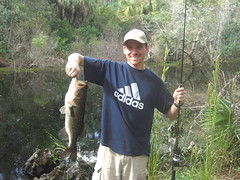
Bass fishing (Photo credit: grubsroom)
Bass caught at Hanamuro stream, Ibaraki Japan
Bass caught at Hanamuro stream, Ibaraki Japan (Photo credit: toyohara)
bass fishing
bass fishing (Photo credit: vigilant20)
Bass fishing
Bass fishing (Photo credit: common use)
Obviously by what it’s called, you’d know that a Bass fishing homepage would be all about bass fishing right? Well, it is, but its not just slapped with pictures and some word contents and left like that. Bass fishing homepages are provided with the utmost attention and dedication to details. They cover everything you need to know about bass fishing.

Many people have been bitten by the pleasure of bass fishing.   Now it’s all over for many of the other things in your life because you have been bitten by the bug, and for most of the ones that are bitten it seems like the “Bass Fever” just gets worst and keeps on spreading. A good number of people out there are being hooked to this activity.

Just to bring up some interesting stuff that can be found on bass fishing are, owning and operating a 3-Day “On-Water” Bass Fishing School, bass charter service, being the co-host on coast to coast radio and TV shows, teaching seminars, fishing bass tournaments, and some articles that can be read all over the world from magazines and over 200 outdoor internet sites.

Don’t you know that calls (about 70% of such) come from the ages that ranged from around 12 years old to about 35 years old. You can imagine that when it comes to bass fishing, it does not choose age as long as one possesses the passion for the sport. Once in a while, you can get a few questions non-related to angling, but mostly anglers seeking information to help them understand more about this great sport, and it is referring to men, women, boys, and girls. The “Bass Fever” has bitten so many people that now bass fishing is considered to be America’s (# 1) number one freshwater sport. It is literally a multi-million dollar industry because it’s certainly addicting!

Many bass fishing homepage provides forums wherein bass fishing enthusiasts can come in and discuss bass fishing. The good thing is that you can come in and ask questions about bass fishing.

These are the most common questions raised about bass fishing;

First are the most important questions that are continually asked by folks, so here goes. The number one question asked about is in terms of  equipment such as, what kind of boats to buy, rods, reels, line, electronics, hard baits (because there are a lot of kinds), plastic baits, hooks, weights, colors, fish formulas (or as some refer to as attractants), containers, and on, and on, and on. All the answers can be located on its home page.

The second most asked questions are about the water and weather conditions, how to locate fish, what baits are the best to use, and so on. These are now the factor for searching the proper place and time for bass fishing.

Just a pleasant advise for all of you who are hooked to the game, always ask around it first particularly in purchasing your needed material in bass fishing;

Here are some simple tips and guides most bass fishing homepages provide to their visitors;

1.Don’t buy everything on the shelf that looks good! (There are a handful of baits that will work anywhere in the nation, face it, bass are bass and pretty much act the same anywhere you go.

2. Learn as much as you can by reading, but try to find an experienced angler who is willing to share his information with you.

3. Check around and talk to anglers for information. Most bass anglers are great people that love bass fishing so much and would love to share information about the sport of bass fishing with others.

4. Enroll in a bass fishing school if at all possible.

5. Always think of safety while on the water, and be courteous to others.

6. Shop around for the best quality equipment for the money you can afford to spend.

These tips and guides are just but a few of the offerings that a bass fishing homepage can offer their visitors. You can get lots of information in a short time. Bass fishing homepages can help you in a lot of aspect about bass fishing; they can even help you out arrange a bass fishing adventure. Check them out today, all you need is a computer and an internet connection.
Enhanced by Zemanta

Friday, September 21, 2012

Bass Fishing Homepage: The Link to Bass Fishing


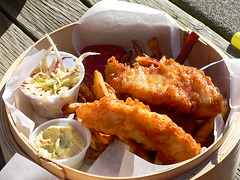
fish & chips
fish & chips (Photo credit: David Ascher)
M. salmoides (Largemouth Bass) caught by an an...
M. salmoides (Largemouth Bass) caught by an angler in Connecticut. (Photo credit: Wikipedia)
Most Americans are fascinated with bass fishing. So, in order that they keep themselves up to date with the bass fishing world, some of the anglers (actually almost all of them) make their own bass fishing home pages.

The bass fishing homepage is an entire collection of link or collection of information like images, sound, and video files, regarding bass fishing.  This are made available through what appears to users as a single web server.

Normally, the home page serves as an index or table of contents to other documents stored at the site. It usually found at the first page of every website.

This Bass fishing homepage is dedicated to giving information about fishing for bass. It contains links to stories, tips, fishing reports, tactics, message board, boating information and products dealing with bass fishing. There are also forums where in bass fishing aficionados can share their two cents.

Bass fishing homepage is intended to keep you well-informed and up to date of the local events and fishing tips.  This will make every effort to keep this site as current as possible.

Here is how to explain the contents of Bass Fishing Homepage:

Stories – this includes the wonderful experiences of anglers about their bass fishing. Mostly, they tell their experiences through the homepage in order to attract customers who are also in search of the best bass fishing experience.

Tips- presented here are the techniques and guidelines on how to do the bass fishing, what baits and lures to use for an effective bass fishing.

Tactics- like the tips written; in tactics, are the techniques and strategies used in bass fishing.

Message Board/Testimonies - in the message board, testimonies from other bass fishing guide are put in here. Also, the previous customers of different bass fishing services make some acknowledgement on how they enjoy their trip and on how these guide services provide them with good vacation.

Boating information – it is very important for bass fisher wanna-be’s to know ideas about what kind of boat is used in this kind of fishing. Stores with fully equipped boats are also can be read here.

Products – these are advertised products from different bass guide services. Including in here are the services they render, the equipments used and the location.

Guides- guide services are also found in bass fishing home page in terms of marketing. They use their homepage to advertise their service, products even locations. They are also the ones to be asked whether someone is deciding to a bass fishing experience.

Most bass fishing homepage that you can see on the internet from most anglers are made for selling and marketing of their product and services. They take this advantage, for them to capture every prospective customers and visitors’ attention.

As seen on : Bass Fishing Home Page In addition, your homepage can also be a help to those who are planning to have a great bass fishing adventure. They can ask for your assistance and opinions about their plans thru your homepage. Besides your homepage will also serves as a directory to your services.

Now, if you are already a good angler and you also want to have a bass fishing homepage for yourself, a simple and easy guide on how to do it can already be a great help for you.

But first what we must consider is explore the brilliant world of Hypertext Markup Language (HTML). Yes! It may sound like a very hard thing to do but do not fret. This HTML is just a group of codes or tags that computers read and easily convert it into a webpage or a homepage. You really need to know HTML in order to make your own bass fishing homepage.

Here are 5 trouble-free steps to make a bass fishing homepage:

1.    Register for a free webpage
2.    Learn HTML
3.    Read other homepage, and learn from it
4.    Make your homepage, design for and make it attention-grabbing.
5.    Advertise...market your page for the world to see and treasure it.

A fast and easy way is to contact a website builder to help you build your own bass fishing homepage.

Just follow these 5 steps and you are on your way to having your own bass fishing homepage. Remember, you can make money out of your homepage! So, be artistic on creating it. Ok, good luck!!


Enhanced by Zemanta

Friday, April 27, 2012

Keeping in touch with bass fishing reports


As seen on : Trout fishing secrets at Lake Shasta lure and newly invented
Fishing nowadays is already considered as a form of sport. In the past fishing is a form of occupation and used to strive for living. They catch fishes for their food and some are for earning some money.

Fishing activities are done in water. This maybe in sea, rivers, lakes, bays, and in other form of water. Almost all bodies of water are rich in fishes and other water products that the fishers are after to. So fishing can be done anywhere and anytime because we are surrounded by bodies of water.

It is a fact the world is composed of seventy five per cent water, and the land is only composed of twenty five per cent. So fishing is very usual to people especially to those who live in nearby shores and water reservoir.

Fishing is fun to do. It brings lots of enjoyment and relaxation to the fisher. Not only these, fishing also contributes to the development of human body because it can be used as form of exercise, not only for human body, it also help our mind to function well, for mind should be used properly in this sport.

There organization groups for bass fishing. They provide education program and enhancement of methods and techniques in bass fishing. They are educating people about fishing through books, flyers and leaflets, and the most sought out way of education that the fishing enthusiasts choose education through the internet.

These organizations for fishing have their very own sites in the web for easier access of their members. Educational materials, advertisements, and tips are posted in their updated pages.

Fishing tournaments are also offered by these organizations. The fishing enthusiasts are very much interested with this. In tournaments, all outgoing and adventurous fishers are joining because of the fun they can have.

In the pages of these sites, fishing reports are being posted for the other fishing lovers to read. These articles are being posted for them to be able to share the experiences and activities regarding fishing that they have done.

These reports are much patronized by the enthusiasts for these are providing tips to a better and more successful fishing.  Articles’ regarding the activities of fishing includes some anecdotes and newly discovered new techniques.

Pictures and images are also present in these reports to more entertain the fishers that are visiting the sites. These pictures are usually eye catching and make amazements to the part of the viewers.

Tips for better fishing are also available in the sites of these fishing organizations. They provide advices that will help in the enhancement and improvement of the fisher’s capabilities in fishing.

Some of the tips and advices in some of the pages that are posted in the bass fishing reports are the following. They are already summarized for easy understanding of the readers

You need to fish bass differently in different kinds of water quality. Following these general guidelines will improve your fishing quality:

Muddy Water: In low-visibility water, a bass finds food using its sonar senses. You must use lures with the best vibration and noise. You can tell if a lure has a high vibration by feeling the shaking of your rod as you bring in the lure. Use your heaviest vibrators and keep them coming at a steady pace so that bass can detect it.

Clear Water: Bass are overly cautious in clear water with high visibility. Their survival instincts kick in, and they are wary of anything out of the ordinary. Use lighter lines that are less visible. Also, use longer casts and lures that resemble bass food in the area. Spinners usually work in clear water, but if they are not working try a black spinner blade to reduce the flash.

Normal Water: This water has normal algae and plankton that filters out sunlight. It is ideal for all types of lures, as the bass are not timid. Use the shotgun approach here and set up 3 outfits, one using a surface lure, one using a deep diver, and the last using a plastic worm. Do about 10 casts with each, and then switch them up to different variations. This is a great way to find out what is working.

Bass fishing reports are of big help in for the enthusiasts of fishing. Other fishers should also contribute and send their reports for the development of the fishing sport.


Enhanced by Zemanta

Tuesday, April 24, 2012

Learn More About Some Techniques on Bass Fishing


As seen on : Basic Techniques of Bass Fishing
Transparent PNG of Smallmouth bass (Micropteru...
Transparent PNG of Smallmouth bass (Micropterus dolomieu) (Photo credit: Wikipedia)
Splitshotting can mean the difference between taking a cold boat ride and a great day of catching fish. Invest the time to practice this technique and you will have more fun bass fishing in the cold winter months. This and other Bass fishing techniques are required to master the art of bass fishing.

If you put the time in, you will soon learn how to master the fall and winter bass fishery in British Columbia. Your efforts will be rewarded with exceptional smallmouth bass of trophy sizes. Remember though it takes roughly 8 to 10 years for a smallmouth bass to attain a weight in excess of 5 lbs., so conserve your catch by practicing responsible catch and release methods.

Well the cold weather has put the bass into their winter patterns. Forget about rip baits, spinner baits and crank baits. Now is the time to break out the finesse gear. One of the most common techniques for getting bass to bite during this season is splitshotting.  It is a fairly straightforward technique and requires little investment in terminal tackle.

The hardest thing there is to teach a bass angler learning to splitshot is detecting the bite. The bite will vary according to the activity level of the fish. There will be times when they pop the bait hard and you will know immediately that they are eating the bait. Other times there will be a soft, almost imperceptible tick and then nothing. And finally there is the dreaded pressure bite. The pressure bite will take two forms.

The first way to describe a pressure bite is you will feel a slight resistance to pulling your line forward. This is somewhat like hooking a soft, spongy rubber band. The second pressure bite is when you lose contact with the bottom.

A bass has picked up your lure and is just following along with your forward movement. This is why it is so important to maintain bottom contact. Once you realize that you've lost the feel of the weight against the bottom, and your depth hasn't changed significantly, you have to put two and two together and get ready to set the hook.

The preferred hook set for this technique is called a sweep set. Once you have detected a fish holding your bait drop the rod tip towards the fish, reel down to the point of feeling resistance (or just shy of that point) and 'sweep' the rod horizontally away from the fish.

If the rod loads up good and you're sure that you've got the hook in the fish just fight him to the boat. If you set the hook and it didn't feel solid you may want to set the hook a second time. The drag on your reel should be set tight enough that it doesn't give on the initial hook set. But it shouldn't be set so tight that a larger fish can't take the line if needed.

British Columbia, Canada's foremost sport fishing web site containing BC saltwater fishing, BC freshwater fishing, maps, fishing tackle news, sport fishing destinations, fishing tips and techniques, editorials, articles and much, much more. Inside you'll find everything you need to tackle trophy fish of all varieties including salmon, halibut, steelhead, trout, bass, and sturgeon to name a few.   They also had their own approach and techniques regarding bass fishing.

Since the best spot to catch bass is never on weeds and cover, use weedless lures when possible. This will cut down on the expense of losing lures.

Bass exist in a wide variety of temperatures, but tend to get inactive during a cold front. Fish swim deeper during the sunniest part of the day. Sun seems to adversely affect bass fishing. Seek out shady spots or deeper water with cover. On cloudy or overcast days try shallower waters. In cold water, retrieve your bait slower. Fish tend to react slower in colder temperatures.

Freshwater Fish Identification is another technique used by anglers. So whether you're watching a consummate professional angler check-in fish during a tournament, or listening to an on-air running commentary on a television fishing program, you know that he'll be speaking the truth of the matter.


Enhanced by Zemanta

Monday, April 23, 2012

Bass Fishing Tackle-Sparing Some Advice from It!


As seen on : Bass Fishing Tackle - How to fish and where to fish crankbaits.
Many say that only those people who live along the seashore get fond of fishing. Most working individuals who live in the cities find more interest to go fishing particularly during weekends when they tend to have their rest after a long week pressure in work.

It is true that some of the people consider it as their source of living but others find pleasure in it, so finally they will realize to just make it as their hobby. Don’t you know that most of the people who are getting into it even spend a lot of money just to buy the necessary equipments for fishing? It includes the baits, fishing rod and even the boats that they prefer to use when they go fishing. Some would even make it as their collections.

Talking about fishing as a hobby and just to give you finer points about it, there are lots of information about bass fishing that you can surf in the net.

Lots of boxes full of lures and baits can be found when you deal about bass fishing. They had been used once or twice and sometimes anglers would suddenly realize that these lures would serve its purpose anyway, so they shouldn’t regret even though they spend a lot of money just to purchase such stuffs.

If this is your motivation for most of your lure purchases, then before you walk into the tackle shop again and spend some more of your hard earned money, you may want to take some advices first from someone who has been there and done that, so you wouldn’t spare any regret in the end.

Most of the anglers usually go to their favorite tackle departments and try to check on the different selections of offerings that they are thinking and planning to purchase. One of the examples of the things that you can realize after visiting your most favorites tackle department is that, fisherman should take it more significantly to look at their lures as tools and not as toys.

Moreover, aside from the necessity of knowing the right tool to be used, for a successful and dedicated bass fisherman, it is a significant consideration that they must try to know the proper manner of using it and under which conditions.

To give you a clear picture on it, here is a very basic instance. Just try to consider this scenario, if a miner is hired to drill a tunnel through bedrock, it would be unproductive to use a bit that is designed to drill through sand or topsoil. Everything must conform under the proper condition.

Now, obviously the same analysis applies to bass fishing, remember that lures are intended to be used in certain situations and conditions. To throw jerk bait with three sets of treble hooks on to a mat of floating moss is the same as attempting to drill through granite with a sand bit. You have to use the proper tool for the conditions at hand.

Lure are used to catch fish but you must bear in mind that by simply throwing your lures in the water, it is already a guarantee that the fish will get  near to you and take the lure as you wish. Bass Fishing needs a lot of considerations, such as the weather condition, the season, the type of body of water (be it natural lake, reservoir etc.). This is just the right time that you will determine where the fish can be found and the time when you can decide on the right lure to be used.

This may seem like a lot of thinking to do on a day of recreating. But of course, the more time you spend on the water, practicing these techniques starts to become second nature and you'll spend much less time organizing expensive lures that don't seem to work. This is already a big help for you anyway.

Remember that there is no substitute for experience, as the saying goes, and there is no opportunity better than fishing to prove that maxim true. So the next time you are in the tackle shop, stop for a minute and think about what you are doing, do not do things without even thinking about it.


Enhanced by Zemanta

Sunday, April 15, 2012

Top Five Braided Fishing Lines

Braided fishing lines are popular with fishermen because they are thinner and more durable than traditional mono lines. They are used in many specialty situations where a stronger, more visible or even less visible line option is needed. They are commonly used on both baitcasting and spinning reels. Below are five of the top braided fishing lines that are available on the market today.

Power Pro Microfilament Line - Power Pro is widely considered to be the most popular brand of braided line available. They have several different options in terms of line material, thickness and strength. This brand of line is specifically designed to not have many of the common problems that some braided lines come with. They are tangle resistant, gentle on line guides and reels and can be used for both spinning and baitcasting applications. Power Pro line does not stretch. This makes it perfect for situations where fishermen need to feel even the slightest pull. There are many different test and length options available.

SpiderWire Stealth - This line is made with microfibers that have been treated with Teflon. It is meant to be a quiet line for casting and retrieving. Many fishermen marvel at the strength of SpiderWire line and routinely report catching fish over its test limit quite easily. It a popular line for use in many salt water fishing situations.

Berkley FireLine - This line made for a spinning reel or baitcasting reel is known for its smooth braid. This smoothness allows it to glide swiftly through the water while minimizing the reel damage that some braided lines can cause. The ease with which Berkley FireLine can be seen in the water is one reason why fishermen have grown to like it so much. It is great for fishing situations where the line may be difficult to see. These situations could include areas where waters have become muddy or grown over by thick vegetation.

Stren Sonic Braid - Sonic Braid line typically comes in a blue and clear coloring and has a fluorescent appearance in the water. It is easy to knot but still retains the very tight and non-stretchy feel that users of braided line desire so much. Sonic Braid is a line that many fisherman claim casts very far without much effort.

Sufix 832 - This braided line is known for its very small line width and ability to float through the water while staying undetected by fish. It comes in a green color that blends easily with most waters. It is a very tightly braided line and has 32 braids per inch. These weaves are done with eight different fiber types. Line of this strength and thinness are perfect for situations where fishermen want to keep their lines from getting tangled in vegetation growing in the water.

These are five of the most well known and highly used types of braided lines on the market. Each of these are thin, durable options for any spinning reel or baitcasting reel fishing scenario. It is important for fishermen to explore a few different options when it comes to fishing lines. Some may be better than others for the exact type of fishing they do most often.

Terry Newton has a website of fishing reels of many brands and types such as the baitcasting reel. We maintain a blog and website where you can get answers to the rest of your questions and even ask questions to be discussed. Come and shop.

Article Source: http://EzineArticles.com/?expert=Terry_Newton

Enhanced by Zemanta


As seen on : The Ultimate Guide to Fishing Rods - Which Type of Rod to Buy and Why

Monday, April 2, 2012

Lake Ontario Salmon Fishing (July 2011)

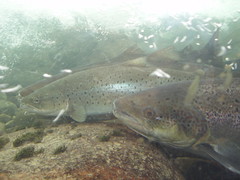
Salmon and sea troutSalmon and sea trout (Photo credit: mrjorgen)
Little SalmonLittle Salmon (Photo credit: Oplotnik)


As seen on : Lake Ontario Salmon Fishing (July 2011)

Types

There are 3 types of salmon found in Lake Ontario, all members of the Pacific family of salmon. There are the Chinook salmon, Coho salmon and pink salmon. A typical-sized Chinook salmon weighs around 10 pounds but the largest specimens of this species may weigh up to 40 pounds. The Chinook name was taken from the Chinook Indian tribe. Other names for this species King, Spring Salmon, and Tyee.

They are iridescent green to blue-green on top with silvery sides and turning white on the belly. Black spotting is present on the top side and on the fins. The Coho salmon has a silvery pink body and are typically 6-12 pounds and rarely exceeds 30 pounds. The pink salmon has a pink upper half body and green lower half with black spots. They are around 3-5 pounds up to 10 pounds.

Lifecycle

Salmon lay their eggs in riverbeds and streams in the fall. The eggs stay in their nests all winter and then hatch in the spring. Newly-hatched salmon spend a few months in streams before "smolting" to become silvery in color and become juveniles or young adults and migrate to the Great Lakes. They can spend up to 4 years in the Lakes before returning to its tributary river to spawn in the falltime. After spawning, they swim upstream and die.

Around Lake Ontario in the springtime, there is a feeding frenzy caused by schools of baitfish in the area caused by warmer waters. Lake Ontario in the Niagara region warms up first caused by warm water from canals from Lake Erie dumping into Lake Ontario.

After the Niagara region warms up, the warm waters will then spread throughout Lake Ontario. Salmon of all stages in their lifecycle can be found swimming near the shores and enjoying the baitfish. Salmon fishing during this season along all ports of Lake Ontario is great and plentiful. Lake Ontario has no doubt a world-class fishery for salmon. 40 pound salmon can be found throughout Lake Ontario.

Techniques

Trolling is an excellent technique for fishing salmon in Lake Ontario. Trolling means to angle by drawing a baited line through the water from behind a slowly moving boat. Downriggers and fish finders are excellent accessories when trolling. Downriggers are devices that maintains your line and bait at a certain level underwater. Salmon tend to hang out in a 54 degree temperature layer where the baitfish are. Mark fish on your fish finder and set downriggers at different depths around 20 feet of where you are marking the majority of fish.

Another way to fish for salmon is in the rivers when they are running up to spawn. Salmon are often taken using spoons, crankbaits or spinners. Spoons are large shimmery flat pieces of metal representing fish in distress. Crankbait are wooden or plastic lures with a lip resembling preyfish. Spinners are elongated lures with a hook on one end and with feathers or fur to disguise the hook.

Salmon Fishing Charters provides excellent
Toronto fishing charters for salmon and trout.

Article Source: http://EzineArticles.com/?expert=Jing_Liang

Enhanced by Zemanta

Sunday, March 18, 2012

Blonde Girl Snagging


This girl is Tuff! She gets out there and snags for the big ones with the boys!
Enhanced by Zemanta

Friday, March 16, 2012

noodling is extreme fishing ,crazy but fun, monster flathead catfish

Clarias batrachusImage via Wikipedia

Dont go in deep water when noodling catfish , dont go alone,dont go into water with a strong current and dont go the water if you live in a state with alligators or crocadiles poisoness snakes, be aware of snapping turtles,muscrats,beavers,leaches,never tie yourself too a fish because many have died from tieing there self too the fish and and beware of loose rocks,watch out for caving holes in the side of banks,it is best too go with someone expirenced. GOOD LUCK. noodling is extreme fishing ,crazy but fun Fearless don't need a fishing pole, Grabbling is wrestle catfish. out of a hole. where monster flathead catfish. lurk during breeding, Hogging Giant Catfish!
Enhanced by Zemanta

Thursday, March 8, 2012

Massive Fish Slices Woman's Leg!

Two girls fight in a dangerous monster fish! Heather gets cut up by it's huge teeth!
Enhanced by Zemanta

Wednesday, February 29, 2012

Beach Shark Fishing


English: Great white shark at Isla Guadalupe, ...Image via Wikipedia
This is great footage that I got from the moment the shark grabbed the bait til me landing it.
Enhanced by Zemanta

Wednesday, October 19, 2011

Huge Fish

Using Nature to Find Huge Saltwater Fish


There are many reasons people enjoy fishing in saltwater. Big waves can battle your ship and test your seamanship while the ocean's deep blue waters can hold teeming amounts of big fish. Tuna, sea bass, or grouper are just a few of the species of fish you can catch with the help of good fishing techniques. However, it is not easy to tell if there are actually fish in the sea you are fishing. Here are some natural clues you can look for to find the bigger fish.

First, try to find a spot in the sea where there is an abundance of sea birds. The birds show you that there are small fishes, since they are the bird's food. These small fish are also food for larger fish as well and odds are there will be a few predators stalking the shoal of baitfish. Just be careful not to catch a sea gull instead of a fish!

The second way to find fish using natural cues is to use the sea current as a guide. Most experienced anglers like to fish during times when the wind is generally blowing to the east. For some reason, this wind makes it much easier to find fish, while the west wind makes it difficult to find fishes. When the sea current is too big, it also will be difficult to fish. In other hand, fish do not like to feed in the low sea current either. Finding a local fisherman and asking his advice or to be your guide is your best bet to find when, where, and what the fish in the area bite on.

Finally, if you like to fish in the saltwater but you don't know where to find the fish, and don't understand the natural currents of the sea; you can always use a sonar fish finder. If you get the right device, they will be able to tell you how many and what sized fish might lurk in the depths under your boat.

Hopefully these fishing tips will help you catch more and bigger saltwater fish. If you're new to the high seas, you may want to read up on sea fishing boats so that you can find one that will fit your needs and your budget.

Article Source: http://EzineArticles.com/?expert=Chris_W.
Enhanced by Zemanta

Monday, July 25, 2011

Catch and Release Fishing

Fishing is a sport, but it has become less about survival and more about fun in recent decades. There is an issue of fish becoming depleted and many anglers are now employing the practice of catch and release fishing. Catch and release fishing is a great theory, but many people are doing it incorrectly and as a result many fish are dying. A few steps should be followed when trying to catch and release a fish. Once you get the hang of how to do it correctly, you will be able to enjoy your hobby and keep the population of fish full in your favorite stream or lake.

The best place to start is with the hooks. A fish that has a hole through its mouth is going to be more likely to survive than a fish with a hole in its lung or gill. If you happen to hook a fish in the gut, the best thing to do is to cut off the hook as much as you can then release the fish. Many times the hook will dissolve and the fish will spit it out, but they can also live with a rusted hook hanging from them. Whatever you do, do not tug on your line to pull a hook out or you will severely hurt the fish. If you are able to easily remove the hook, use a pair of needle nose pliers. The process of pulling the hook out is easier if you remove the barbs from the hooks, but try not to wiggle while you pull the hook out.

Fish are obviously unable to survive outside of the water. Therefore, the longer that it takes you to release them, the more it becomes as if you are suffocating them. The way that a fish is gripped when out of the water will make a big difference. For instance, avoid touch a fish’s body with your bare hands. The fish have a slimy protective coat that will be stripped if you touch them with your hands. If you have to touch a fish, make sure that your hands are wet. You may want to wear gloves to protect your hands from cuts or permeating fish smells.

Part of the fun in fishing is to “play out” the fish. The struggle can be what some anglers wait all day to do. Fish are like humans; when they “work out,” they build up lactic acid. When you are fighting a fish, they are fighting too. Just like when someone works his or her body out and it feels sore, a fish experiences the same thing. The build up of lactic acid can be toxic to a fish even days later. Therefore, if you are going to practice catch and release, try to keep the struggle to a minimum.

Try not to let a fish flop around when you catch them. A fish that flops around can bruise or damage its internal organs, causing them to die later from the injuries that are incurred. You can also revive a fish if you need to do so. A fish is likely to run out of oxygen and pass out, so to speak. In order to revive a fish, you place the fish in the water with their belly down and gently grasp their tail. Start to slowly move their tail back and forth until they give you the signal that they are ready to take off into the water. Sometimes you will need to repeat the process more than once, but don’t let a fish go until they are ready. A fish that is not ready to swim could get carried away and swept into rocks or embankment and cause serious injury.

More than anything, when you are practicing catch and release, have everything ready to go. Make sure that your camera, pliers, and gloves are in reaching distance. Try to take the precautions necessary to preserve fish and one of America’s favorite pastimes.
              
Enhanced by Zemanta

Thursday, July 14, 2011

Fishing For Beginners

Fishing BoatImage via WikipediaIf you are new to the sport of fishing, you need to know some of the basic rules of fishing. Like other forms of hunting, fishing involves both your environment and those around you. Be respectful of both. You can responsibly enjoy this treasured pastime in several ways.

Fishing is an ancient practice. It dates back nearly 10,000 years. A number of various techniques and traditions have been used during fishing's progression. Modern technological developments have changed the way people fish, but many of the same rules, regulations, and social norms involving fishing remain.

Always practice good stewardship of our waterways when you are fishing. Remember that these waterways were around thousands of years before you and will remain long after we are gone. You can make a conscious decision to leave the areas in which people fish in better condition than when you found it. Take care of our lakes, rivers, and other waterways so that others will enjoy these areas for years to come. Practicing certain behaviors will ensure that you are taking good care of the places where people fish.

Never litter when you are fishing. Always bring a trash bag or other receptacle to use for the collection of your trash. You can easily deposit it in a nearby trash receptacle. Dump your refuse in properly assigned dumping stations instead of tossing it in the water. You do not need to spend much time figuring out the many ways in which this hurts the environment.

As you fish, always use the correct type of bait and fishing gear. Certain areas allow for certain bait and gear. You will also encounter limits on the number, size, and kind of fish that you can keep. Become familiar with what these limits are and pay attention to them. Do not wait until you are at your fishing spot to search for what is allowed and what is not. Check with your destination before you head out on your fishing trip to see what the local regulations allow. If you plan on using a boat while fishing, research to see what kinds of watercraft are allowed where you are going to fish.

Every fishing location is different, so pay special attention to local procedures and cautions. This also applies when you decide to clean your boat after you leave the water. You do not want to spread non-native species to another body of water.

Finally, never fish where it is not permitted. There is always a reason why it is illegal. Some reasons include the protection of certain wildlife, the proper care of vegetation, and the safety of you and others who want to fish.

You should also follow a number of cautionary behaviors to ensure your safety. As with all forms of hunting, safety is first. If you will be using a boat while you fish, always wear your life jacket. Make sure that your passengers wear their life jackets, as well.

Be very careful when baiting and removing hooks. Make sure that you never fish on unauthorized waterways. Follow the posted speed limits and wake warnings that accompany the use of a boat. Bring with you all relevant safety items, such as water, flashlights, maps, and a cell phone.
          
Fishing continues to be a favorite pastime. 2001 saw nearly 16% of the U.S. population over the age of 16 spend 16 days fishing. You enjoy the sport of fishing, so follow the rules that allow for the continuation of fishing. Be responsible and courteous of others and your environment. Take time to discover how you can be both a better and safer angler.
Enhanced by Zemanta

Tuesday, July 12, 2011

Fishing With Children

Fishing reelImage via WikipediaOften times as adults, we want to share our hobbies and pastimes with our children. However, it can be difficult to decide when that pastime is appropriate. Children have shorter attention spans that make it difficult to calculate when they are ready for certain things. Fishing is a common hobby of many people around the world and many people are eager to introduce their children to fishing the minute they can hold a fishing rod. Fishing is a lesson in patience for children and a structured way to teach them a sport that involves precision and safety.

When you take your child fishing, the most important thing to keep in mind is their safety. What kind of fishing are you trying to introduce? Are you thinking about a day of bottom fishing? Does pier fishing suit your needs? Are you going to go all out and take your child for a deep-sea fishing excursion?

Regardless of what you decide is best, you should have the basic safety essentials with you at all times. A first aid kit is mandatory because whenever a kid is involved accidents will happen. Children tend to get poked, scratched, and barbed, so you need to be prepared. If you are going out into the sea and away from the shore, make sure that you have life jackets and make sure that your child is wearing one even he or she has no intention of getting into the water. Keep in mind your child’s abilities when it comes to swimming. If you do not think that they are a strong swimmer, you may want to keep your boat docked.

Make sure to buy and stock your child’s tackle box. A youngster’s first tackle box should be small and lightweight. There is nothing complex about the contents of a beginner's tackle box. All a child needs are some pre-tied hooks, some bobbers, a couple of weights, swivels, and small scissors or fingernail clippers to cut their line. A tackle box is a fingerprint for many who view it as a personal expression. Let your child see the basics so that they can build their own to represent themselves one-day.

Make sure to lead by example when you take your child fishing. Teach them how to keep the line taut so that they will be able to respond properly if a fish bites their line. As soon as your child feels the bite, teach them how to set the hook. Tug back on the rod in order to firmly set the hook in the fish’s lip. Take the time with your child to let them learn techniques like “playing the fish”. Part of the fun of fishing is the struggle between the man and the fish, so let your child have the entire experience and not just a partial one.

When you introduce fishing to your child, you have certain advantages to teaching them at a younger rather than older age. Younger child have a greater absorption rate with a desire to soak up as much information as they can. Take the time that you and your child are sharing to educate them about catch and release regulations and fishing for food as opposed to pleasure. If your child decides that they want to let the fish that you catch go, make sure that you know the right way to release. Cleaning the fish can either make a child vomit or ask when the next trip is going to be, so use discretion in regards to age when preparing your catch for dinner.
There will be good days and bad days when fishing with your kids. Kids have a tendency to not listen, become disinterested fast or fall asleep at inopportune times. Patience is the key to taking children out for a day of fishing. Repetition will also make your child more comfortable with the whole process. Regardless of whether a fish is caught or not, take the time to bond with your child while using fishing as an excuse.
Enhanced by Zemanta

Monday, July 11, 2011

Fishing for Sharks

Great white shark. Photo by Terry Goss, copyri...Image via WikipediaIt seems like every sport has a category that is set aside for the extreme. Believe it or not, there are some that were not deterred by the movie Jaws and they choose to seek out sharks instead of run from them. If you are so bold as to take on shark fishing, you should understand some basics before hitting the open sea.

If your goal is to actually catch a shark, the best time to do it is in June. The temperature is not too hot and it will attract more of the predators you seek. If you decide to fish for sharks in the middle of the summer, you should be aware of water temperatures and try to find the coolest spot possible.

When you plan a shark-fishing trip, you need to be prepared. Many people would advise keeping a checklist beforehand in order to help you with preparation. Some things that you should include when packing for your trip are chum and proper gear. Your rods and reels should be able to handle a three hundred fish or greater. Typically, you should plan to fish with three to five baits in the water at a time. Therefore, you will need many rod and reel setups to accompany the ratio of bait.

The best rod to use is a fifty to eighty pound class rod. You should not forget your harness and safety straps (you do not want to fall overboard and become live bait). In addition, you want to remember your bait and chum. Running chum is the most effective way to trap a shark so be prepared for a mess onboard.

It is important to know what species of shark you are wanting to fish. Different sharks swim at different levels and temperatures. In order to set a shark trap, you will have to tie your farthest bait off the bow rail with a flat line clip. Make sure that the line is out of the way and stay in the highest rocket holder on the particular side of the boat from which you are fishing. You should attach your bait, attach a weight or balloon on the line, and plunge it approximately eighty feet. The second rod’s bait is set down sixty feet while resting in the trolling holder; this line is also attached to the midship with a rubber band. The third line is set down thirty feet with no balloon but rather free bait. You should make sure that your drags are loose so that you will be alerted early by the clicking sound of the reel. If you color code your balloons, it will be easier to tell which rod is being pulled.

Once you have waited and finally caught your shark, be prepared. Sharks will have different temperaments and act according to their agitation. Some sharks have been known to slightly drag the bait before they swallow, while other sharks will run at the boat, run in the opposing direction from the boat, or come right up to the boat. If you need a harness, make sure that the harness is safely attached to the boat and the reel.

Once you have the shark close to the boat, your experienced sidekick will be able to help. You will want to hand wire the shark into the boat. Hand wires are meant to be sturdy and they will not break if you are attached to them. Do not wrap the wire around your hand because you want to be able to let go of the wire easily if you have to. If you are keeping a shark, you will need to gaff and rope it by its tail.
                                                         
Remember that you should only keep a shark if you have plans to eat it, use it in a tournament or if you believe it is a contender for the world record. You can take a picture with the shark without killing it.
Enhanced by Zemanta

Thursday, July 7, 2011

fishing accessories

For some people, fishing is a pastime. For others among us, it is a serious sport. However you perceive it, fishing is enjoyable when you’ve got the proper accessories to use. Here is a list of some considerations to think over.

Often there is a nice spot to fish from the shore of a pond, lake, stream or river. Other times, you will need to consider what kind of transportation you will need to get over the water. The canoe is the oldest craft. It is the traditional vehicle of the American Indian and has great traditional value, but that does not mean it is the best kind of water transportation available. A canoe can be tippy at the best of times and especially hard to handle in the wind but paddling or drifting along makes it easy to approach good spots to fish undetected.

A small rowboat without a motor is considered the best kind of boat to use since you can stand up in it to cast. Although it is best to row to the spot where you intend to fish, a small trolling motor is handy for travelling some distances. Larger pleasure boats with outboards are also recommended, but a boat with high sides is best as big lakes and broad rivers are prone to winds that can whip up big waves.

You will also need to pick out some quality footwear. This becomes especially important if you are going to fish by the side of a lake. Hip boots are the most practical for this as they can be rolled down if you’re not wading. While hip boots can also be used for stream wading, chest or hip waders are traditionally best here. When choosing chest or hip-wader boots, select ones that have a loose fit. Having waders that are too tight could restrict leg motion and undue stress on the seams could leave you wet.

The proper jacket is also a necessity. Jackets come in two basic lengths: Long and short. The long style is designed for fishing from a boat or wading in shallow water. If you are planning to use chest waders, it is recommended you use a short jacket since the bottom of a long jacket would drag in the water. You should select a jacket with generous pockets for carrying lure boxes and other accessories. A hat with a visor is another good idea because you will have your eyes on the water and need some kind of shade.

The avid angler has three stashes of lure and tackle-box containers. The first stash is for the home stockpile, the second and larger one for the boat, and a third stash is for the car. That way, you will always be covered in the event of a loss or other mishap. It is a good idea to buy a large supply at the beginning of the season too so you will have lots on hand, especially if you like to fish at night.
                                                 
With the right fishing accessories and gear, you can turn your fishing experience into a better one. The last thing you want when the time for that perfect catch nears is to realize you are missing an important piece of equipment. Preparedness is among the most important aspects of fishing, so make sure that you have all of the gear you need to have the best experience of your life.

Enhanced by Zemanta